The Real Story: AI Change Is a Matter of Leadership
AI Transformation Is a Problem of Governance because AI transformation is not simply about adopting new technology; it is about strong leadership, clear planning, accountability, and responsible decision-making. AI Transformation Is a Problem of Governance when organizations introduce AI into business operations, data management, and decision-making without clear policies and oversight. Strong AI governance helps leaders manage AI risks, protect data privacy, follow regulations, improve transparency, and ensure accountability throughout the AI transformation process. Without effective governance, even advanced AI solutions can create ethical, security, compliance, and operational problems. By recognizing that AI Transformation Is a Problem of Governance, organizations can balance AI innovation with responsible AI practices, build stakeholder trust, improve AI adoption, and achieve sustainable digital transformation. Ultimately, AI Transformation Is a Problem of Governance, and strong AI leadership and governance are essential for achieving long-term value from AI transformation.
The Hidden Truth About AI Transformation
AI Transformation Is a Problem of Governance because AI transformation is not simply about implementing new AI tools or adopting advanced algorithms. AI Transformation Is a Problem of Governance because successful AI transformation requires a strategic approach to AI governance, responsible AI, data governance, people, processes, technology, and clear leadership. Organizations that understand AI Transformation Is a Problem of Governance can better manage AI risks, improve accountability, protect data, and support responsible AI innovation. By treating AI Transformation Is a Problem of Governance, businesses can create stronger AI strategies, improve AI adoption, and achieve sustainable digital transformation with greater trust, transparency, and long-term value.
Why AI Transformation Goes Beyond Technology
Successful AI transformation is not about picking strong software or machine learning tools. It is about how AI becomes a part of business activities. A solid AI plan, control, handling data well and changing the way the organization works all help companies get real results from their AI spending. Making sure AI is used properly and that people are involved leads to outcomes. The way AI is added to the business can make a difference in what the company achieves. Thinking about all these parts helps companies get the most, from their AI efforts.
The Growing Role of Governance in AI
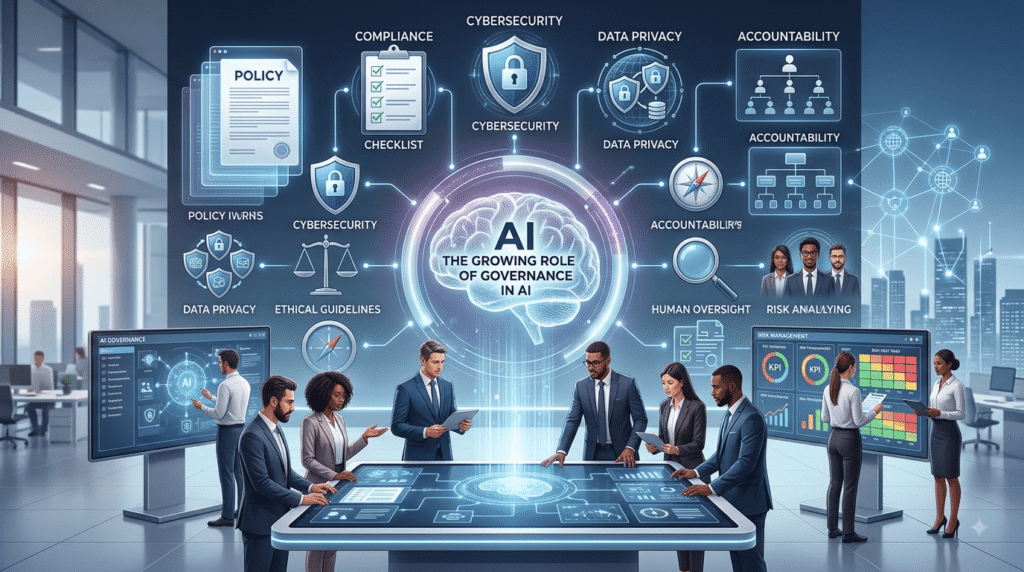
AI governance gives us the rules and guidelines we need to use intelligence in a good way.It helps us be responsible and effective when we use intelligence.AI governance is important for businesses because it helps them be transparent.They can also protect information and manage the risks that come with using artificial intelligence.
The main goal of AI governance is to help businesses build trust in the decisions made by intelligence.With AI governance businesses can use intelligence in a way that is fair and good for everyone.AI governance is really about using intelligence in a way that is responsible and safe.Businesses need AI governance to make sure they are using intelligence correctly.
AI Transformation Is a Problem of Governance because AI governance plays a central role in building trust in AI-driven decisions. AI Transformation Is a Problem of Governance when businesses need to ensure that AI systems are fair, transparent, responsible, and safe. Strong AI governance helps organizations manage AI transformation responsibly by establishing clear rules, accountability, and ethical standards. By recognizing that AI Transformation Is a Problem of Governance, businesses can use AI correctly, protect stakeholders, reduce risks, and make AI transformation more trustworthy and sustainable.
Why Businesses Struggle With AI Transformation
Lots of companies have a time with Artificial Intelligence transformation. This is because they do not have a plan their data is all over the place they do not have the right experts people are, against change and they do not have good management.
Artificial Intelligence transformation can be more successful if companies work on Artificial Intelligence leadership teach their employees skills use Artificial Intelligence in a responsible way and manage changes well.
Why AI Transformation Is a Problem of Governance
AI transformation needs more, than advanced technology because businesses have to deal with AI risks, data privacy, ethical standards, compliance and accountability at every step. Good AI governance provides a structure that allows companies to create new ideas with confidence while keeping things open, safe and trustworthy.
Technology Alone Cannot Drive AI Success
Advanced AI tools can make work faster and better. They help with tasks and making choices.. Just having the technology isn’t enough. Companies need a plan for AI. They need leaders. They need data. They need to train workers. They need rules to manage AI. All these things help make AI work for the business. All these things help make AI work for the business. All these things help make AI work, for the business.
AI Decisions Require Clear Accountability
When Artificial Intelligence systems have a say in major business decisions companies need to know who is in charge and what they have to do to check the results and fix any mistakes. We need people to keep an eye on things Artificial Intelligence systems to be accountable. Everything to be out, in the open and managed properly. This way the decisions made by machines are good make sense and match what the business wants to achieve with Artificial Intelligence systems.
Balancing Innovation With Responsible AI
Businesses need to get things right when it comes to using Artificial Intelligence. They have to make sure they are moving forward with Artificial Intelligence quickly. They also have to be careful. A good plan for using Artificial Intelligence in a way doing things in an ethical manner with Artificial Intelligence following the rules and always keeping an eye on things can help businesses come up with new ideas, with Artificial Intelligence while keeping customers and employees of the businesses safe and also protecting the businesses themselves.
The Key Governance Challenges of AI Transformation
## The Main Problems of AI Transformation
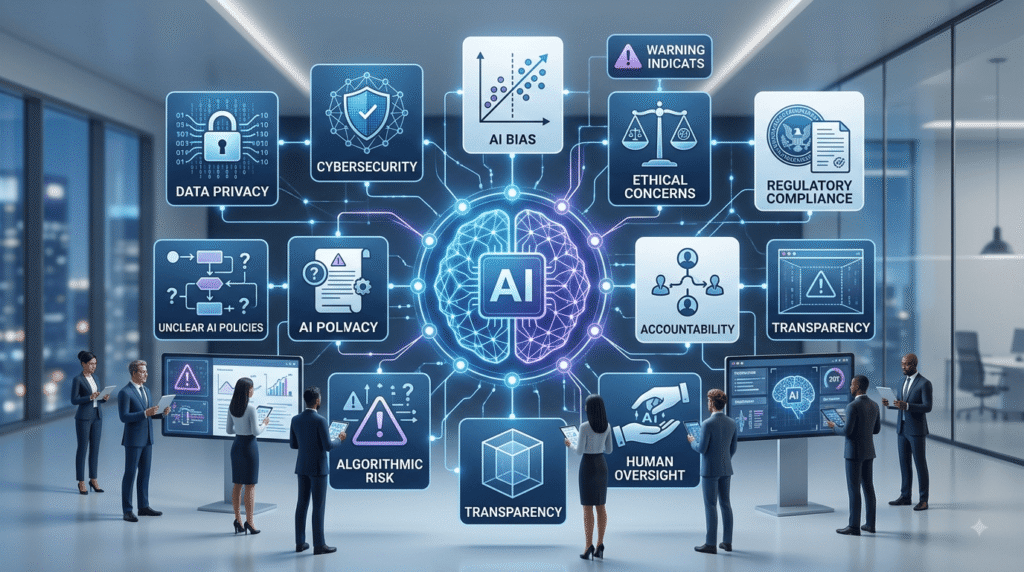
AI transformation is a way for businesses to get better at what they do automate tasks and make good decisions.. It also brings some tough problems. When companies start using intelligence in different parts of their business they need to make sure they have clear rules for using AI in a responsible and safe way.* **AI governance challenges** are a deal because AI systems need a lot of sensitive information to work properly.This means that **data privacy and security** are really important. Companies also need to deal with **AI bias**. Make sure their algorithms are transparent. They need to think about ** AI** and be accountable for what their automated systems do.The rules for using AI are changing fast so companies need to stay on top of **AI compliance and risk management**.Another problem is that companies do not have rules for using AI.They need to have policies and frameworks in place.Sometimes employees use AI tools without understanding the risks.That is why ** oversight** is so important.People need to watch what AI systems are doing and catch any problems.Companies need leaders from teams like technology and legal teams to work together to make AI work well.
In the end companies need a plan for using AI that balances **innovation** and ** AI adoption**, with what the business wants to achieve and building trust over time.This plan should also consider **business objectives**. **Long-term trust** to make sure AI transformation is successful.
Final Thoughts on AI Transformation and Governance
AI Transformation Is a Problem of Governance because successful AI transformation requires more than adopting new technology. Organizations need strong AI governance, clear AI leadership, responsible AI practices, data privacy, risk management, and human oversight. When businesses understand that AI Transformation Is a Problem of Governance, they can build an AI strategy that supports innovation while protecting data, managing risks, and maintaining accountability. Strong governance helps businesses make AI transformation more secure, transparent, responsible, and sustainable.
Why Governance Should Come Before AI Scale
AI Transformation Is a Problem of Governance because organizations should establish AI governance before rapidly scaling AI adoption. Clear governance policies, accountability frameworks, risk controls, and data governance help businesses manage the challenges of AI transformation. By recognizing that AI Transformation Is a Problem of Governance, companies can address data privacy, regulatory compliance, algorithmic risks, AI bias, and accountability before expanding AI across their operations. Good AI governance creates a strong foundation for responsible and successful AI transformation.
Building a Responsible and Sustainable AI Future
AI Transformation Is a Problem of Governance when organizations want to achieve long-term value from artificial intelligence. A responsible AI future requires businesses to combine AI innovation with transparency, security, fairness, compliance, and human oversight. Strong AI governance, continuous monitoring, employee awareness, and responsible AI practices can help companies manage AI transformation effectively. Ultimately, AI Transformation Is a Problem of Governance, and organizations that prioritize governance can build trust, reduce AI risks, support responsible AI adoption, and achieve sustainable AI transformation.
FAQ’S
1. Why is AI transformation a problem of governance?
AI transformation is a problem of governance because successful AI adoption requires more than advanced technology. Organizations need clear AI governance policies, accountability, risk management, data privacy controls, compliance standards, and human oversight to ensure AI transformation is responsible, secure, and aligned with business goals.
2. What does AI governance mean in AI transformation?
AI governance provides the rules, policies, and frameworks that guide AI transformation. It helps organizations manage AI risks, protect sensitive data, improve transparency, maintain accountability, and ensure that AI systems are used responsibly throughout the AI transformation process.
3. Why is AI transformation not just a technology problem?
AI transformation is a problem of governance, not simply a technology problem, because businesses must manage people, processes, data, risks, and decision-making. Even powerful AI tools can create problems when organizations lack strong AI leadership, clear policies, and effective oversight.
4. How does AI leadership support AI transformation?
AI leadership helps organizations plan, manage, and monitor AI transformation. Strong AI leaders establish governance frameworks, assign accountability, manage AI risks, encourage responsible AI adoption, and make sure AI initiatives support important business objectives.
5. What are the main AI governance challenges in AI transformation?
The main AI governance challenges include data privacy, cybersecurity, AI bias, transparency, accountability, regulatory compliance, risk management, employee awareness, and human oversight. Addressing these challenges is essential for successful and responsible AI transformation.
6. Why is data privacy important in AI transformation?
Data privacy is important because AI systems often process large amounts of business and personal information. Strong AI governance helps organizations establish data protection policies, control access to sensitive information, reduce privacy risks, and support responsible AI transformation.
7. How can businesses manage AI risks during transformation?
Businesses can manage AI risks by creating clear governance policies, conducting regular risk assessments, monitoring AI systems, protecting data, training employees, and maintaining human oversight. Effective AI governance allows organizations to scale AI transformation while controlling potential risks.
8. What is the role of accountability in AI transformation?
Accountability ensures that people and teams remain responsible for AI decisions and outcomes. During AI transformation, organizations should clearly define who manages AI systems, who reviews their results, and who takes action when an AI system produces an incorrect or harmful outcome.
9. Should AI governance come before AI adoption?
Yes. Organizations should establish basic AI governance before rapidly scaling AI adoption. Clear policies, accountability frameworks, risk controls, and data governance help businesses build a safer foundation for AI transformation and responsible AI adoption.
10. How does responsible AI improve AI transformation?
Responsible AI helps organizations balance innovation with fairness, transparency, security, privacy, and human oversight. By using responsible AI practices, businesses can build trust, reduce AI risks, and create a more sustainable AI transformation strategy.
11. Can AI transformation succeed without strong governance?
AI transformation can begin without strong governance, but scaling it successfully becomes much more difficult. Without effective AI governance, businesses may face data privacy problems, compliance issues, AI bias, security risks, unclear accountability, and reduced trust.
12. What is the connection between AI transformation and governance?
AI transformation and AI governance are closely connected. AI transformation introduces new technologies and ways of working, while governance provides the rules and accountability needed to manage those changes. Strong governance helps organizations achieve AI transformation safely, responsibly, and sustainably.
13. How can companies build sustainable AI transformation?
Companies can build sustainable AI transformation by developing an AI strategy, establishing governance policies, protecting data, training employees, monitoring AI systems, managing risks, and maintaining human oversight. These practices help organizations achieve long-term value from AI.
14. Why is human oversight important for AI transformation?
Human oversight ensures that AI systems are monitored and that important decisions can be reviewed by people. It helps organizations identify errors, manage AI risks, improve accountability, and support responsible AI transformation.
15. What is the biggest lesson from AI transformation?
The biggest lesson is that AI transformation is a problem of governance as much as technology. Organizations need strong AI leadership, responsible AI practices, data governance, accountability, risk management, and human oversight to turn AI innovation into sustainable business value.